
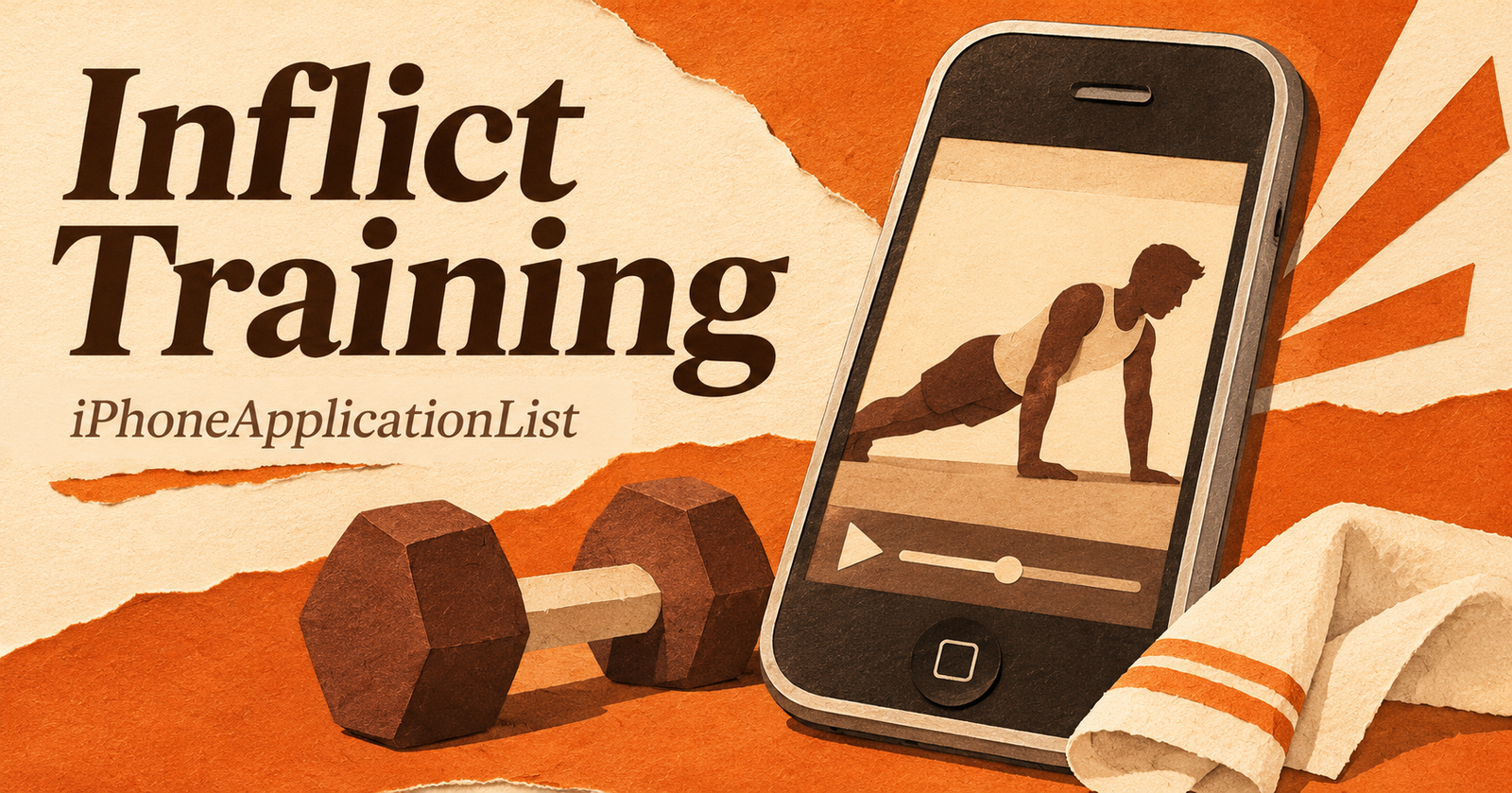
Inflict Training was a workout-video app from Inflict Training, LLC. The May 2009 listing described a nine-workout program with moving demonstrations, audio explanations and written tips.
The demonstration was the main interface
The promotional description emphasized video instead of still pictures and named its layered visual presentation Inflict Motion. That makes this a particular historical product, rather than a generic list of exercises or a step-counting app.
The source also connected the program to a named coach and made strong promotional claims about the quality of its presentation. Those claims are historical marketing, not independent evidence that a program is appropriate or effective for every viewer.
Assess the instruction, not only the image
When comparing current instructional apps, examine how clearly an ordinary example explains its starting position, movement and equipment. Check whether the program describes the intended audience and how to obtain help when an instruction is unclear. A polished animation or high-resolution video does not by itself establish suitable guidance for an individual.
Access conditions matter too: determine what is included in the specific product, whether content must be streamed and whether additional purchases are required. These are evaluation questions, not confirmed features of Inflict Training. The archive identifies the original app and its video-led approach; current availability, compatibility and support have not been established here.
Sources and publication dates
This guide was published on 19 November 2026. Dates below refer to the original coverage where the archived page supplies a publication date.
- May 2009 listing — original coverage: Sunday, May 24th, 2009.